Anti-vibration rubber feet and foam pads for aquarium equipment
VibrationLook for dense pads sized to the equipment footprint. Check the material is suitable for a damp stand.
Reader-supported: some links on this page are affiliate links. As an Amazon Associate I earn from qualifying purchases, at no extra cost to you.
Name the sound first. Rattles are usually vibration, gurgles are usually water level or air, and grinding is usually the impeller.
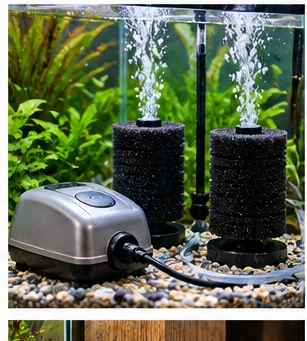
Most aquarium noise comes from five places: something touching the pump or filter, a low water level, air in the system, a dirty or worn impeller, or a part resting on a hard surface. Work out which sound you have first, then fix the cheapest cause first. Unplug the equipment before you touch it, and follow the maker's manual for anything inside the housing.
Different noises point to different causes, and a short listen saves a lot of guessing. Turn off other noise in the room, stand close, and try to place the sound: in the pump, at the stand, at the glass or at the water surface.
| Sound | Common cause | Try first |
|---|---|---|
| Rattle or buzz | Pump or filter touching glass, stand or a hose | Move it, add foam or rubber feet, check what it touches |
| Low hum | Motor vibration passing into a hard surface | Rest it on foam, or hang it, and check the tubing |
| Gurgle or splash | Low water level or air in the line | Top off the tank, check the intake and outlet height |
| Whine, grind or click | Dirty or worn impeller, or debris | Unplug, open per the manual, clean the impeller area |
| Whistle or squeal | Air or water forced through a narrow gap | Check fittings, airlines and any flow restriction |
The table shows common patterns, not a diagnosis. If a sound is new, loud, or comes with a burning smell, smoke, heat or a tripped breaker, stop using the unit, unplug it and read the manual or contact the maker. Our electrical safety guide covers drip loops and outlets.
This is the most common problem and usually the cheapest to fix. The motor itself vibrates, and whatever it touches amplifies the sound like a speaker cone. A pump on a bare stand top, a canister pressed against the cabinet wall or an air pump sitting on glass can all produce a loud buzz from a quiet motor.
A simple test tells you whether the pump or its surroundings are making the noise. For an external unit such as an air pump or a canister, slide a folded towel under it while it runs and listen. If the sound drops sharply, the surface was amplifying it and soft padding will help. If the sound stays just as loud, the noise comes from the motor or impeller, and you are looking at a cleaning or a part replacement. Keep your hands dry, do not touch cords or plugs with wet hands, and skip this test for submerged pumps.
Look for dense pads sized to the equipment footprint. Check the material is suitable for a damp stand.
Clips hold tubing away from glass and stand edges. Match the clip size to your tubing diameter.
A gurgle is usually the sound of air meeting water. In a hang-on-back filter, a low tank water level can let the intake pull in air, and the output can splash into a shallow spot. Topping off the tank often fixes both. In a tank with a canister, air that gets into the filter after a cleaning can cause gurgling until it works its way out; the manual explains how to prime and bleed your model.
If the sound comes from inside the pump, the likely suspects are the impeller and its shaft. A pump moves water with a small spinning part, and grit, snail shells, plant debris or wear can make it rub or click. The fix is to unplug the unit and open it as the manual describes, then clean around the impeller and shaft and check that the parts seat correctly.
Check your filter's model name before you order parts, because impellers and shafts are made for specific pumps. Our return pump guide compares pumps that are designed to run more quietly. If the part is worn out on an older pump, replacing the pump may cost about as much as the repair kit.
A small kit of quiet-making parts is cheap and handy. Keep these in a drawer or a labeled box.
If you also run an air pump with stones or wands, see our guide to air stones, bubble wands and discs for accessory choices that affect noise. For the filter side of maintenance, our canister filter cleaning guide covers tools and steps that protect media while you service the pump.
A repair makes sense when the noise has a simple cause and the part is cheap. Replace the unit when the housing is cracked, when the motor hums but does not turn, when the cord is damaged, or when the pump has grown noisier after every cleaning. Never repair a damaged cord or a cracked electrical housing yourself; stop using the unit and replace it, and ask a qualified electrician about outlets if you are unsure.
Search with the exact model name on your pump or filter. Check the listing names your model before you order.
The usual cause is vibration against a surface. Check what the filter touches, add rubber feet or foam, and make sure hoses and the lid are not carrying the vibration.
Often a low water level or air in the line. Top off the tank, check the intake for cracks, and follow the maker's steps to purge air from a canister.
Often yes, if you unplug it, open it as the manual describes and clean around the impeller. If the impeller or shaft is worn, many makers sell replacement kits for their models.
Put it on a soft base or hang it so it touches nothing, loosen tight tubing and check for a worn diaphragm. See our guide to quiet air pumps for more.
Replace it if the housing is cracked, the cord is damaged, the motor hums without turning or the noise returns after every cleaning.
This is a practical troubleshooting guide based on common equipment behavior. It quotes no decibel levels, flow rates or replacement intervals, because they vary by model. The maker's manual decides how to open, clean and reassemble your pump and what parts it accepts.
Heads-up: AquariumSetup.co participates in the Amazon Associates and eBay Partner Network programs. We may earn a commission on qualifying purchases at no extra cost to you. We only recommend gear we believe is genuinely useful to beginners.