Coarse aquarium filter sponge pad, cut to fit
ReusableCheck the pad's thickness and size against your filter's media chamber. Read the listing to confirm you can cut it.
Reader-supported: some links on this page are affiliate links. As an Amazon Associate I earn from qualifying purchases, at no extra cost to you.
Cartridges are the easy, exact-fit option. Reusable media costs less over time and keeps bacteria. Compare a yearly figure, not a pack price.
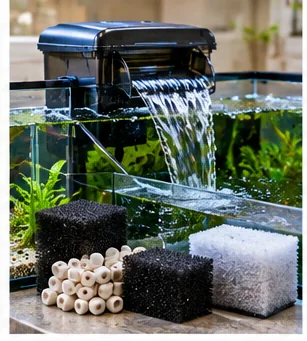
Brand cartridges are worth buying when you want the simplest routine and the exact fit the maker designed. Reusable media is worth it when you are willing to spend an afternoon cutting a sponge once, because it can cost less over time and keeps its beneficial bacteria between cleanings. The right answer depends on how often the cartridge must change, whether a good-fitting alternative exists for your filter, and how much tinkering you want to do.
A cartridge is a pre-shaped insert that fits one family of filters. One retailer's guide describes the typical design as filter floss for catching particles plus activated carbon for chemical filtration, and says such cartridges clog quickly and are hard to clean. The same guide points out that a replacement schedule of one to three months is common, and it suggests that schedule benefits the people who sell them.
Remember that the author of that guide sells reusable media, so read its claims as one side of the argument. Still, the basic facts hold up. A cartridge is consumable by design, it is shaped for a particular filter, and the schedule on the box is the maker's suggestion, not a law. Your manual says what the maker recommends for your model, and that is the document to follow.
Reusable media is any insert you rinse and reuse. That usually means a coarse sponge pad or block for catching particles, ceramic rings or similar porous material for bacteria, and an optional bag of chemical media you replace on its own schedule. The guide above describes rinsing sponge pads and bio-rings in old tank water, without soap, to keep the bacteria on them, and says they can last years. It also says a coarse pad can be cut to the right size for a filter.
Our filter media guide covers the types, and says the biological layer should not be replaced on a schedule, only rinsed in removed tank water when flow drops. That is the main reason people move away from cartridges: a cartridge swap removes the surface where bacteria live, and a sponge you rinse keeps it.
| Question | Brand cartridge | Reusable media |
|---|---|---|
| Fit | Made for specific filter models | You cut and arrange it; fit depends on your work |
| Routine | Swap and discard on a schedule | Rinse in old tank water; replace only when worn |
| Cost over time | Recurring; add up packs per year | One purchase, then occasional replacement |
| Bacteria between cleanings | Lost when the cartridge is replaced | Kept if you rinse gently |
| Risk | Low; follows the manual | Gaps can let water bypass the media if it is cut badly |
The table hides one real difference: the cartridge is the lower-effort option on day one, and the reusable setup is the lower-effort option on day three hundred. If you do not enjoy fiddling with a filter, a cartridge is a legitimate choice, and nothing here says you must switch.
Check the pad's thickness and size against your filter's media chamber. Read the listing to confirm you can cut it.
Search with the exact model name from your filter's label, and check the listing's compatibility list before you order.
Skip the per-pack price and work out a yearly figure. It takes four numbers: the cartridge price, how often your manual says to change it, the cost of the reusable media you would use, and how long you expect that media to last. Multiply the first two to get a yearly cartridge cost, then divide the reusable cost by its expected life in years. If the guide's claim that sponge lasts years is right, the reusable side shrinks quickly, but your own numbers decide.
Count your time, too. Cutting a sponge once takes minutes. Rinsing it every few weeks takes minutes. Neither is a burden compared with a monthly trip to buy cartridges, but both are chores that a cartridge replaces with a single swap. If you will forget the rinse, the cartridge routine may keep your filter cleaner in practice. The same retailer's guide gives prices, and we do not repeat them here because they change; look at current listings.
Third-party cartridges exist for many popular filters, and fit varies. A listing that names your filter model and shows a photo of the cartridge is a better sign than a generic size. The same goes for reusable media: a listing with exact dimensions beats a vague "fits most".
Some filters are built around their cartridge, with no basket or open chamber to fill. In those, cutting a sponge to fit may block the flow path or leave gaps, and the cartridge is the sensible choice. The same is true if you want the filter to behave exactly as the maker tested it, or if you have little time to maintain it. A cartridge is also easier to hand to a house sitter. If your filter has a fixed slot, stay with the cartridge and add bio media elsewhere in the system.
You do not have to choose one or the other. A common compromise is to keep using the cartridge but add a cut piece of sponge or a bag of bio media to the same filter, so there is a permanent surface for bacteria. When you replace the cartridge, the sponge keeps its colony. After a few cycles, you can decide whether the cartridge is still doing anything you need.
Stagger changes so the filter is never fully reset at once. Replace the cartridge but leave the sponge alone, or rinse the sponge a week after changing the cartridge. Our canister filter cleaning guide explains the same principle for canister filters, and our canister versus HOB guide compares the two filter types. For picking a whole filter, see our filter buying guide.
If you are keeping cartridges, buy the pack that matches your exact model, and note the change interval from your manual. If you are moving to reusable media, buy a coarse sponge pad large enough to cut, a small bag of bio media if there is room, and a mesh bag or basket if your filter has space. Keep a spare piece of sponge so you can swap one in while you rinse the other.
Check that the bag fits your media chamber and that water can pass through it. Rinse before use as the maker directs.
Your filter's manual gives the maker's recommendation. A retailer's guide notes one to three months is a common schedule, but follow the manual for your model.
Often, if your filter has a media chamber a sponge can fill and water must pass through it. Check the manual, measure the space and avoid gaps that let water bypass the sponge.
It can cost less over time and keeps bacteria between cleanings, since you rinse it in old tank water instead of throwing it away. It takes more setup than a cartridge.
The answer depends on the maker. Read the warranty terms and the manual, or ask the maker's support before you change the media.
Yes, if there is room and water still has to pass through everything. Many keepers add a sponge so there is a permanent surface for bacteria when the cartridge changes.
This comparison uses one retailer's published guide on filter media. The retailer sells reusable media, so treat its view as one side of the question. No cartridge change intervals, media prices or compatibility lists for specific filters are claimed here. Use your own filter's manual for the maker's schedule and approved media.
Heads-up: AquariumSetup.co participates in the Amazon Associates and eBay Partner Network programs. We may earn a commission on qualifying purchases at no extra cost to you. We only recommend gear we believe is genuinely useful to beginners.