Aquascaping tweezers, scissors and spatula set
Core toolsA stainless set with long tweezers, curved scissors and a spatula covers planting, trimming and substrate work. Choose lengths that suit the tank depth.
Reader-supported: some links on this page are affiliate links. As an Amazon Associate I earn from qualifying purchases, at no extra cost to you.
Tools beat equipment for planted-tank gifts. Stainless tweezers, scissors and a spatula suit nearly any tank, and hardscape works for keepers who rescape.
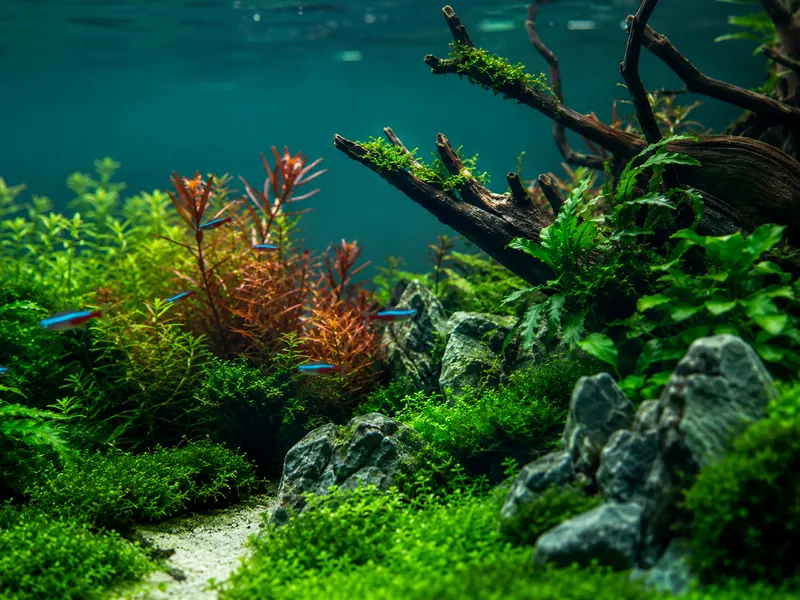
Planted-tank keepers get the most use from tools: long tweezers, curved scissors, a spatula and a good glass cleaner. After that come hardscape pieces such as wood and rock, which suit the aquascaper who changes their layout. This guide keeps to tools, hardscape and layout supplies, and leaves out lights, CO2 and fertilizer, which depend on the tank and the keeper's routine.
Planted tanks are maintained with hands and tools more than with machines. The keeper trims stems, plants carpets one cluster at a time, repositions rocks and lifts out debris, usually through a few inches of water. Poor tools make all of that harder, and good ones last for years. A gift here does not depend on tank volume, power ratings or app ecosystems, which is why tools are far safer than a light or a pump.
If you also want a general-purpose option, see our gift guide for fish keepers, which sorts gifts by experience level.
Three details on a tool listing separate a good gift from a disappointing one: the length of each tool, the material, and what is actually in the set. Some sets pad the count with items most keepers never use. Read the contents, and prefer a smaller set of tools the person will use over a long list.
Tools last longer with a little care. Rinse them in clean water after use, dry them before they go back in a pouch, and keep them away from household cleaners and sprays, since residue can reach the tank on the next use. A tool roll or a small tray on the stand keeps them together. Good tools are worth keeping, so a gift of this kind can still be in use many years later.
Most aquascaping tool sets cover four jobs. Long straight tweezers plant and pull stems. Curved or bent tweezers reach under hardscape. Scissors, often with a curved blade, trim stems and carpet plants. A spatula or a flat scoop moves substrate and smooths slopes. Our aquascaping tools guide explains what each does and what a minimal kit needs.
Tool length matters more than most gift buyers realize. A short tool on a tall tank leaves the keeper's hand in the water. A long tool on a small tank is clumsy. Look at the tank, estimate the depth, and choose a tool a few inches longer than the depth if the listing gives lengths. Stainless steel is the common choice for tools that live in water, though you should read the listing for notes on rust or coating wear.
Beyond the four basics, a few small items round out a set. A fine-mesh net catches floating clippings after a trim, which is the part of the job most keepers dislike. A tool roll or a sturdy pouch keeps the set together, and a damp cloth sized to wipe tools dry helps them last. A pair of long tongs can reposition hardscape without dislodging neighboring plants. None of these depends on what the tank runs, which keeps them safe to buy blind.
A stainless set with long tweezers, curved scissors and a spatula covers planting, trimming and substrate work. Choose lengths that suit the tank depth.
A flat scoop is easy to use for moving sand and soil without disturbing plants. Pick a width that suits the tank footprint.
Wood and rock are the structure of a layout, and keepers who like to rescape often go through several pieces. A well-chosen piece of driftwood or a few rocks can be a better gift than another tool, but only if you buy from a seller that sells for aquarium use and read the listing for any notes. The driftwood and hardscape guide covers what to look for.
Because shape and size decide whether a piece works, a loose "surprise" piece is risky. A keeper with a specific vision wants specific pieces. Ask what they are planning, or give a gift card to a specialist aquascaping store and let them choose. For keepers who do not rescape often, skip hardscape and give tools.
Pick pieces sold for aquarium use and read the listing for size and any preparation notes. Check that sizes suit the tank footprint and height.
If you do buy a piece blind, buy a modest one. A small, well-shaped piece of wood can always find a place in a layout, while a very large piece can dominate a tank and force the keeper to start over. Measure against the tank's footprint if you know it, and remember that planted tanks leave room for plants around the hardscape.
| Keeper type | Good gift | Skip |
|---|---|---|
| Planting their first layout | A starter tool set and a spatula | Specialist lights or CO2 gear |
| Trims every week | Better scissors, a second set of tweezers, a glass cleaner | Hardscape they did not choose |
| Rescapes often | Hardscape pieces, a gift card to an aquascaping shop, a larger spatula | Tools with unusual tips they may not use |
| Low-tech and relaxed | Basic scissors and tweezers, a cleaner sized to the glass | Anything with a controller or app |
The last row matters. A keeper who runs a low-tech tank has chosen simplicity, and a complicated gift fights that choice. Tools respect it.
Planted tanks are display tanks, and a clear viewing panel is part of the point. A cleaner suited to the glass or acrylic is a steady-use gift. Rimless tanks have thick glass without a frame, and some cleaners fit them better than others, so read the thickness range on the listing. See the algae scraper guide for the types. Glass cleaners also differ in how they handle the silicone seams at the corners, so read the listing for any notes on seams and frames. If the tank is acrylic, look for a scraper the maker says is safe for it, since sand or grit can scratch the surface.
Read the glass thickness range on the listing and note whether it is meant for glass, acrylic or both.
Planted tanks range from simple low-tech tanks with a few hardy plants to high-tech layouts with pressurized gas, strong lighting and a fertilizer routine. The tools in this guide suit both. The equipment does not: a gift that fits a high-tech tank can be pointless or unwelcome on a low-tech one. If you do not know which kind of tank the keeper runs, stay with tools and hardscape.
If you are still stuck, a short note and a tool set do more than an expensive guess. A gift receipt lets the keeper swap lengths or tip shapes, which is the most common reason a tool gift misses.
A stainless tool set with long tweezers, curved scissors and a spatula is the safest choice, since it does not depend on tank size. A glass cleaner suited to their tank material is another dependable gift.
Long enough to reach the substrate without putting the hand in the water, so look at the tank depth and choose a tool a few inches longer. If the listing gives lengths, compare them to the tank.
It suits keepers who redesign their layout, but only if you buy from an aquarium seller and match what they are planning. For anyone else, a tool or a gift card is safer.
Only if they gave you the exact model. Lights and CO2 gear depend on tank size, plants and the keeper's routine, and pressurized gear needs care.
This guide covers tools and hardscape only. Plants depend on the keeper's tank, so choose tools instead.
This is a buying guide built from general equipment knowledge, not a review of specific products. No prices, lengths or compatibility figures are quoted. Tool lengths, glass thickness ranges and materials vary by product, so read the listing.
Heads-up: AquariumSetup.co participates in the Amazon Associates and eBay Partner Network programs. We may earn a commission on qualifying purchases at no extra cost to you. We only recommend gear we believe is genuinely useful to beginners.