Digital aquarium thermometer with probe
DisplayLook for a submersible probe, a display you can read from where you stand, and, if you want it, a high/low alarm. Check the cord length against the distance to your lid.
Reader-supported: some links on this page are affiliate links. As an Amazon Associate I earn from qualifying purchases, at no extra cost to you.
A digital probe is easier to read and can add alarms. A glass thermometer is a fine backup. Placement and a second reading matter more than the type.
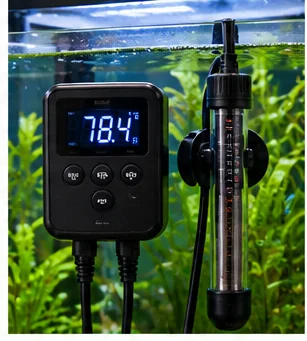
A digital probe thermometer is the better pick for most tanks, because you can read it from across the room, set it where it represents the water, and add a high/low alarm on some models. A simple glass thermometer is still a sound backup and costs little to own. The type matters less than two habits: place it away from the heater, and keep a second thermometer so you can tell when one of them has drifted.
Aquarium thermometers come in four common styles, and each reads something slightly different.
The important difference is what the device tells you and when. A glass thermometer tells you the temperature when you look at it. A digital probe with an alarm can tell you when you are not looking, which is the situation that actually causes problems.
| Type | Strengths | Watch for |
|---|---|---|
| Glass | No battery, simple, easy to swap if one reads oddly | Small scale is hard to read; can crack or fall off its suction cup; check it sits where it can be read |
| Digital probe | Large display, optional alarms or min/max memory, probe placement is flexible | Needs a battery or power; the cord must be routed through the lid; check the sensor is rated for submersion |
| Stick-on strip | Cheap and nothing inside the tank | Reads the glass, not the water; shaded or cold-room glass can mislead |
Accuracy is the question most buyers ask first, and the honest answer is that it varies by model and is printed on the spec sheet, if at all. Plan to check any thermometer against another one when you first install it.
Look for a submersible probe, a display you can read from where you stand, and, if you want it, a high/low alarm. Check the cord length against the distance to your lid.
A plain glass model works as a second opinion. Choose a large, clearly marked scale, and check the holder will fit your glass thickness and the space behind your decor.
You do not need lab gear to catch a thermometer that is off. Put two thermometers of different types in the same spot, such as side by side in a bucket of tap water that has sat for a while, and compare them once the readings settle. If they agree closely, you can trust either one for everyday use. If they disagree by a noticeable amount, one of them is wrong, and you will not know which without a third.
A third reading breaks the tie. A second digital unit or a glass model you already own will do. Whichever one stands alone against the other two is the suspect. If a digital model has a calibration or offset setting, the manual will say so; if it does not, retire the unit that disagrees and use the others. Repeat the check whenever a reading looks wrong, after a battery change, or after a thermometer has been dropped.
Placement changes the reading as much as the type does. Water near the heater is warmer than water across the tank, and a thermometer pressed against the heater tells you about the heater, not the tank.
Sumps, rimless tanks and tanks with a closed lid add details. For a sump, think about what happens to the water level around the probe if the return pump stops. For a rimless tank, a suction cup holder needs clean, dry glass to stick, and a cord needs somewhere to run. For any probe cord that leaves the tank, leave a drip loop and keep the connection above the water line. Our electrical safety guide explains the loop, and the thermometer's own manual is the final word.
Check the holder and the glass before you buy. Suction cups need a smooth, clean surface and lose their grip over time, so a thermometer can slide down and end up lying in the gravel. A glass thermometer can scratch glass or acrylic if it slides, which matters on an acrylic tank. If you are choosing between floating and suction-mounted models, a suction mount holds a steady position, while a floating model can drift into a corner or get caught by a filter flow.
With a digital probe, look at the cord and the connector. A thin cord needs a gap in the lid or a spot at the back to pass through, and a lid that presses on the cord can damage it. Check how long the cord is, where the display will sit, and whether the display runs on a battery or a plug. A battery model needs a calendar reminder, because a dead battery looks like a blank screen and is easy to miss. If you use a plug-in model, follow the manual on where the adapter sits relative to the water.
If you also run a heater controller, keep the thermometer independent of it. A second probe that is not connected to the controller gives you a separate reading, and that is the point. Our heater guide covers the heater side, and the smart controllers and monitors guide covers readings you can see on a phone.
Most tanks do well with one digital probe thermometer as the main reading and one glass thermometer as the check. If your budget only allows one, the digital probe gives you the easier reading, and you can add the second later. Replace any thermometer that has been dropped, shows condensation inside the tube, or disagrees with two others.
Useful as a rough outside reading on a small tank. Treat it as a hint about the glass, not as the temperature of the water.
If you want a warning when you are away from the tank, look for a unit that shows both limits. Read the manual for how to set and test the alarm.
Not necessarily. Accuracy depends on the model and is listed on its spec sheet, if at all. A digital unit is easier to read and can add alarms, but it is still worth checking against a second thermometer.
At the far end of the tank from the heater, at mid-depth, in moving water and where you can see it. Avoid placing it right beside the heater, in a dead corner or in a stream of bubbles.
They give a rough idea, but they read the outside of the glass, not the water. They are best as a hint on a small tank or as a spare check, not as your only reading.
Place it next to another thermometer of a different type in the same water and compare once both settle. If they disagree, add a third. The one that disagrees with the other two is the suspect.
Yes, if you can. A separate thermometer gives you an independent reading, so a drifting controller probe does not go unnoticed.
This guide is general equipment advice and relies on no outside figures. No accuracy numbers, temperature ranges or alarm limits are quoted, because they vary by model and by the animals in your tank. Read the maker's spec sheet for a thermometer's accuracy and the manual for how to set and test any alarm.
Heads-up: AquariumSetup.co participates in the Amazon Associates and eBay Partner Network programs. We may earn a commission on qualifying purchases at no extra cost to you. We only recommend gear we believe is genuinely useful to beginners.