Products and configurations to compare
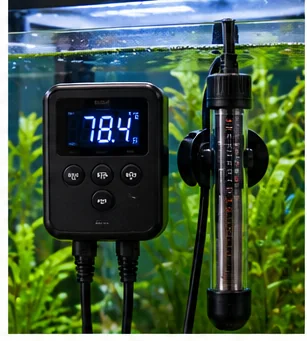
INKBIRD ITC-306A
Dual heating outputs plus alarm.
Best when: you run one or two conventional heaters
Watch for: controller body must stay dry
Two smaller aquarium heaters
Failure of one is less catastrophic.
Best when: tank needs 300–400W total
Watch for: two devices to maintain
Independent aquarium thermometer alarm
Catches controller or probe drift.
Best when: you want independent monitoring
Watch for: another probe to place
Set heater thermostats slightly above controller setpoint
That lets the controller do normal switching while preserving heater internal cutoff as backup.
Use two heaters below total required capacity each
A single stuck-on unit then heats more slowly.
Keep probes in representative flow
Avoid direct heater plume.
Alarm limits should be meaningful
Not so tight that daily noise causes alarm fatigue.
Test shutdown manually
Warm the probe gently and verify power actually cuts.
Redundancy is the upgrade
A heater's failure modes matter more than tiny differences in wattage. A stuck-off heater usually cools the tank slowly; a stuck-on heater can overheat livestock quickly. Using two smaller heaters plus an independent controller can reduce the impact of a single failure and gives you a second temperature sensor/alarm path.
Controller wattage must exceed the combined heater load. INKBIRD's current ITC-306A is rated to 10A and 1200W at 120V, which is far above typical home aquarium heater loads, but the controller body and connections still need to stay dry and be installed with drip loops.
Placement affects control quality
Put heater elements in strong circulation and place the controller probe where it represents the aquarium, not directly beside the heater. In sumps, consider what happens if the return pump stops and the heater chamber water level changes.
Before checkout
- Exact tank volume and livestock needs are known
- Equipment rating matches freshwater, saltwater or reef use
- Combined electrical load fits the outlet/controller
- Every cord has a drip loop and dry connection point
- Waterproof does not get assumed from 'splash resistant'
- Pump flow is evaluated after head height and restriction
- Replacement media, tubing, probes or bulbs are available
- Automation has a manual fallback
- Leak and siphon paths are considered
- The upgrade solves a specific maintenance or stability problem
Buy reliability before another feature
Aquarium gear becomes expensive when each item is judged alone. The better question is what failure or maintenance task costs the tank the most stability. A spare air pump may be more valuable than another smart light. A hose brush can restore more filtration than a new media pouch. A small leak sensor can matter more than a dashboard nobody checks.
Write the problem in one sentence: “the canister flow falls every month,” “I miss fertilizer doses,” “the reef overheats if a heater sticks,” or “I travel and cannot see whether the feeder dispensed.” Buy for that sentence rather than for the feature list.
Commission every automated device
Run new automation while you are home. Force the heater controller through its setpoint, intentionally lift the ATO sensor, measure dosing output into a graduated cylinder, trigger the leak sensor, and run the feeder with the exact food for several days. Automation should reduce uncertainty, not hide it.
Document calibration date, bulb date, tube size, replacement media part number and spare location. The aquarium becomes easier to own when the next maintenance job does not require rediscovering the system.
Frequently asked questions
Can ITC-306A run two heaters?
Yes, within its combined output rating.
Current rating?
10A / 1200W at 120V.
Do I still use heater thermostats?
Yes, set them as a secondary safety limit.
Do controllers replace GFCI?
No.
Current product/source checks
Affiliate disclosure: AquariumSetup.co is an Amazon Associate and may also earn through eBay Partner Network links at no extra cost to you. Amazon links use scouttheory-20; eBay links use campaign 5339137014.